TL;DR: You can learn a surprising amount about your AI visibility without paying anything, and most of what is worth knowing first — whether crawlers can read you, whether your pages answer questions directly, what an engine actually says about you — is available free. What free cannot give you is a rate of change over time, which is the thing you eventually have to pay for.
What free tools can genuinely tell you
Whether AI crawlers can reach your site. This is the most common blocker we see and it is completely checkable for free. If GPTBot or ClaudeBot is blocked in robots.txt, or your content only exists after JavaScript runs, nothing else matters.
Whether your pages are structured to be extracted. Answer-first writing, clear headings, extractable specifics. Checkable.
What an engine says about you right now. Ask it. This is one observation rather than a measurement, and it is still worth doing before you buy anything.
Whether your structured data is valid.
What free tools cannot tell you
A rate. Generative answers vary between identical asks. One check is a data point and the thing you need is a trend, which requires repeated measurement on a schedule — and that is the work nobody gives away.
Which engines disagree, and how.
Whether an answer was retrieved or remembered, which decides which work will help.
The free tools worth using
Peak Answer's free tools — 38, no signup
The largest set of genuinely free tools in this category, and most need no email address. The ones worth starting with:
- AI visibility audit — answer readiness, crawler access, robots.txt, sitemap, structured data, headings, readability, in one pass
- Answer readiness score — whether your pages are written to be extracted
- Prompt gap checker — which buying questions you are likely to be missing from
- llms.txt generator — ten minutes, no strategy attached
- FAQ schema generator
- Semantic keyword tool
All 38 free tools, no account required for most.
Asking the engines directly
Free, obvious, and skipped more often than it should be. Open ChatGPT, Claude, Perplexity and Google, ask the question your buyer would ask, and read what comes back. Note whether citations appear — that tells you whether the engine searched, which is the single most useful free signal available.
Do it three times on different days before drawing a conclusion.
Google Search Console
Free, and the AI Overview impressions data is increasingly useful. It is not a complete picture of AI visibility, and it is real data about a real surface.
Bing Webmaster Tools
Free, and relevant because Copilot draws on Bing.
Schema validators
Google's Rich Results Test and schema.org's own validator. Free, fast, and they catch the structured-data errors that stop you being parsed correctly.
A free hour, well spent
- Check robots.txt for GPTBot, ClaudeBot, PerplexityBot by name — 5 minutes
- Fetch two key pages without JavaScript and read what comes back — 10 minutes
- Run the free AI visibility audit — 5 minutes
- Ask four engines your top buying question and note citations — 20 minutes
- Validate your structured data — 10 minutes
- Read three cited sources and check whether you are mentioned — 10 minutes
That hour will find the majority of what is wrong on most sites, and none of it costs anything.
What the measurement actually says
Most writing in this category is advice. This section is the measurement behind it, and it is ours: fourteen markets measured end to end, and 505 tracking runs on our own category.
How winnable a market is varies more than anyone admits
We measured fourteen markets with the same engine the product runs for customers, scoring every domain the engines cited. The entry bar - how small a cited site can be and still get quoted - ranged from 12 to 66 out of 100.
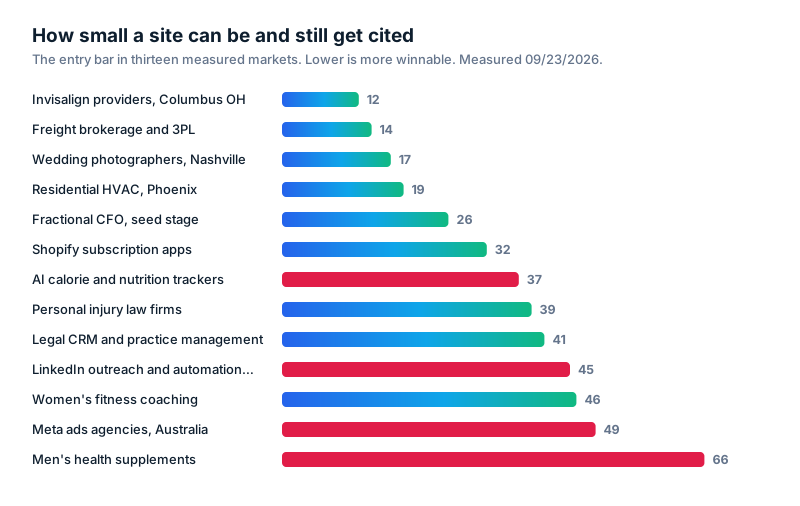
That is the difference between a quarter of work and a year of it, in the same discipline, decided entirely by which market you are in. Any vendor quoting one timeline has measured one market at most.
In Invisalign providers in a single city the bar was 12 and the typical cited site scored 25: a handful of well-made procedure and cost pages clears it. In men's health supplements the bar was 66 and GNC, a national retail chain, scored 62 and cleared it on one question in three, because the engines answer health questions out of medical sources and will not name a shop.
In most markets, your own site is not what gets cited
Content share is the proportion of cited sources that are somebody else's article rather than any vendor's own page. In nine of fourteen markets it was 100%.
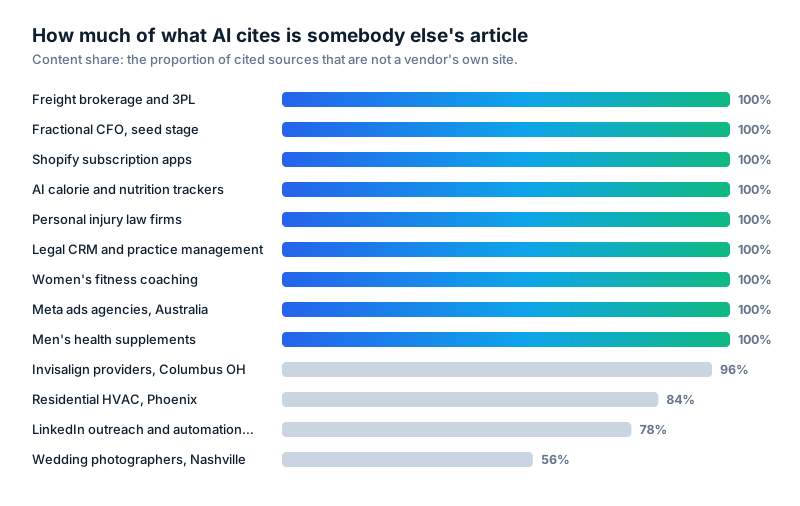
In those nine, publishing more of your own content cannot put you in the answer, because no vendor's own content is being cited at all. The mechanism is editorial: being named inside the pages that do get cited. The one outlier was wedding photography at 56%, where the answer to the question is a list of photographers and the engines cite their portfolios directly.
This is the single most useful thing to know before choosing a tool, and almost none of them will tell you, because almost none of them report at the source level.
The gap between the floor and the middle is where newcomers get in
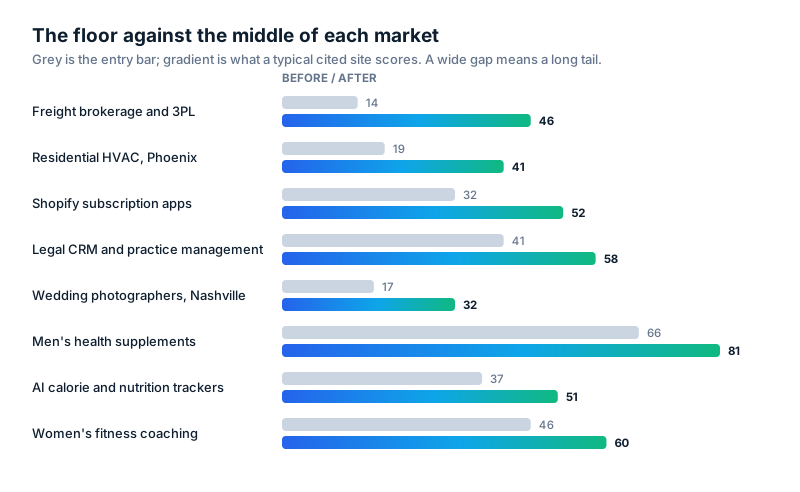
A wide gap means the engines are citing a few large publications and, underneath them, a scattering of much smaller sites. That tail is the opening. Freight brokerage had a bar of 14 against a median of 46, the widest spread we measured, and almost any serious page clears 14.
A narrow gap means the opposite. LinkedIn outreach tools had a bar of 45 against a median of 49 - four points - which means every cited site is roughly the same size and nothing small is getting in underneath.
We ran the same study on this category
505 tracking runs, 22 buying questions, every citation recorded and attributed to the question that produced it.
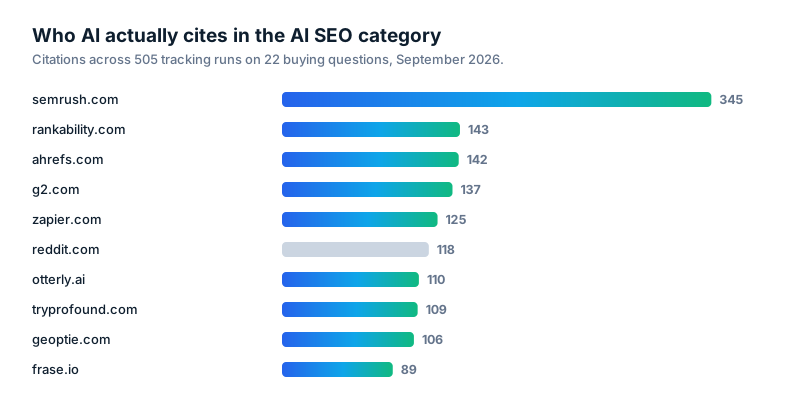
Two things fell out of it. Semrush at 345 citations is nearly two and a half times the next domain, and it is cited on use case, pricing and category questions rather than comparison ones: the engines reach for established publishers when the question is general. And Reddit at 118 citations is a top-ten source, which is the most actionable line on this page for a small company. You cannot become Semrush. You can answer a question in a thread.
The question type that quietly wastes a measurement budget
Six of our 22 questions were "alternatives to [competitor]". Those six produced most of the competitor citations in the whole study.
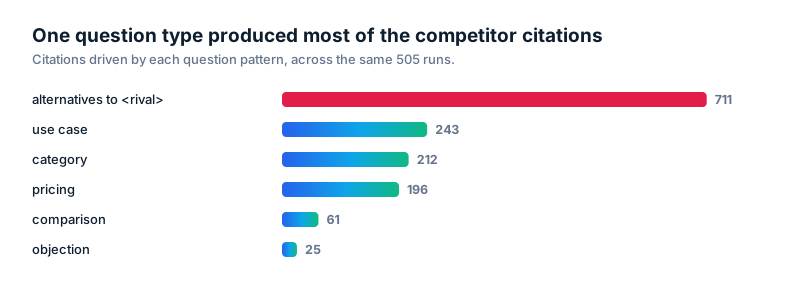
Obvious on reflection and we had not reflected on it: asking an engine to enumerate a competitor's alternatives returns competitors, cited from competitor comparison pages, none of which is a site you can get a link from. We cut that question type from six to two. The signal was worth having once; it was not worth a quarter of the budget every week.
If you are evaluating tools, this is worth checking in whatever you buy. Look at what your prompt set is made of, and look at what the citations come back as. A set made entirely of vendor-selection questions can only ever produce a citation list of vendors.
The one distinction that decides which work pays
Everything else on this page is detail. This is the thing to get right.
An AI engine answers in one of two ways, and they need opposite fixes.
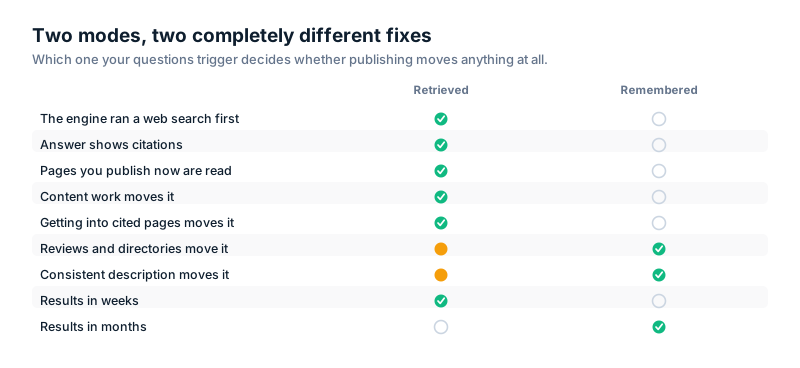
Retrieved. The engine ran a web search, read a handful of pages, and summarised them. Those pages decide the answer. Content and placement work, and they work in weeks, and a small company can win because the engine is summarising documents rather than ranking brands.
Remembered. The engine answered from training data that closed months ago. Nothing you publish this quarter will be read, because nothing is being read. Only breadth of presence moves it: reviews, directories, consistent description, over months.
Work on the wrong one and you get no result and no explanation, which is how a year disappears. So the question to ask any vendor is not how many engines they track. It is whether they will tell you, per question, which of these two you are facing.
Most of this category cannot. It is the row in the feature table worth more than the other fourteen put together.
When free stops being enough
When you need to know whether something changed. Everything above is a snapshot, and the question that matters after the first month is whether the work is moving anything — which needs the same questions asked on the same schedule across the same engines, recorded. That is a subscription, and it is worth starting cheap.
Frequently asked questions
Is there a free AI visibility tracker?
Free trials, yes. Permanently free continuous tracking, no, because the cost is in running the queries and that cost is real.
Are free tools accurate?
For technical checks, yes — they are deterministic. For "what does ChatGPT say about me", a single check is accurate about that moment and tells you little about the rate.
How many free tools do I need?
One good audit plus asking the engines yourself covers most of it.
What should I check first?
Crawler access. It takes five minutes, it is the most common blocker, and everything else depends on it.