TL;DR: Writesonic is a content platform that added AI visibility tracking, not a tracker that added content. That ordering is right for teams whose bottleneck is publishing volume and wrong for teams who need to know what to publish. The tracking is adequate rather than strong, and the content tooling is genuinely good.
What Writesonic is
A content production platform — articles, landing pages, marketing copy — with an AI visibility module added as the category emerged. From $49/mo as checked in September 2026, covering four engines.
What it gets right
The content tooling is good. This is its actual product and it shows. Output quality, format range and publishing integration are all strong, and it is faster from idea to published page than anything else on this list.
The ordering is honest. It does not pretend the tracking is the centre of the product. Plenty of tools in this category imply more measurement sophistication than they have; Writesonic is clearly a content tool with a useful addition.
Price. $49/mo for content production at this quality is competitive on its own, with the tracking effectively thrown in.
What it gets wrong
The tracking is thin. Four engines, limited source reporting, no distinction between answers the model retrieved and answers it produced from memory. That last one matters more than any other gap, because it decides whether publishing will help at all.
Content without a measured target. This is the structural problem with content-first tools in this category. Our research across fourteen markets found content share at 100% in nine of them — every cited source was somebody else's article, not a vendor's own site. In those markets, publishing more of your own content is close to the least effective available action, and a content tool has no way to tell you that you are in one.
Nothing outside content. No placement targets, no outreach, no social, no technical audit. If the measurement says the problem is that you are absent from three roundups, Writesonic cannot help with that.
Who should buy it
Teams who already know what to write about, whose constraint is producing enough of it, and who want some visibility measurement alongside without paying for a second tool.
Who should not
Anybody whose actual question is "what should we be writing about", because that is the question the thin tracking cannot answer well, and getting it wrong is more expensive than publishing slowly.
The field
| Tool | Best for | Engines | Entry price | Acts on findings |
|---|---|---|---|---|
| Peak Answer | measurement plus the work it implies | 6 | $49/mo | Content, placements, social, technical |
| Profound | enterprise reporting | 5+ | Quoted | No |
| Peec AI | daily single-brand tracking | 5 | €90/mo | No |
| Otterly | cheapest credible tracking | 4 | $29/mo | No |
| AthenaHQ | agencies and multi-brand | 5 | $295/mo | Partial |
| Scrunch AI | crawler and agent visibility | 5 | Quoted | Technical only |
| Semrush AI Visibility | teams already on Semrush | 5 | $99/mo add-on | Via Semrush |
| Writesonic | content production first | 4 | $49/mo | Content |
Prices checked September 2026.
Pricing, in the unit you actually consume
Every vendor prices in a different unit - prompts, credits, queries, tracked keywords, brands - and none of them is the thing you buy. What you buy is model responses per month: questions times engines times frequency.
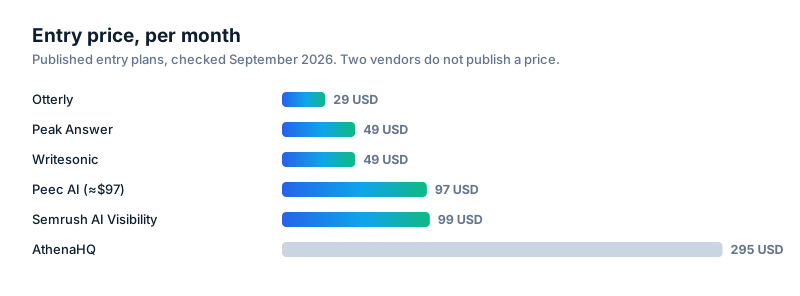
Converted, the ordering changes completely.
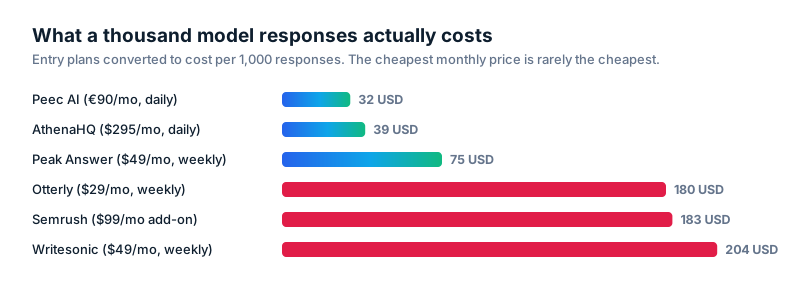
| Tool | Entry | Engines | Refresh | Responses/mo | Per 1,000 |
|---|---|---|---|---|---|
| Peec AI | EUR 90/mo | 5 | Daily | ~3,000 | ~$32 |
| AthenaHQ | $295/mo | 5 | Daily | ~7,500 | ~$39 |
| Peak Answer | $49/mo | 6 | Weekly | ~650 | ~$75 |
| Otterly | $29/mo | 4 | Weekly | ~160 | ~$180 |
| Semrush | $99/mo | 5 | Weekly | ~540 | ~$183 |
| Writesonic | $49/mo | 4 | Weekly | ~240 | ~$204 |
Two things this makes visible. Daily refresh dominates the economics: Peec and AthenaHQ look expensive monthly and are the cheapest per response, because they measure seven times as often, which is only value if you will act seven times as often, and most teams will not. And the cheapest monthly price is the most expensive per unit: Otterly at $29 costs roughly five times more per thousand responses than Peec at EUR 90.
Figures rounded, from published entry plans.
What each one does after it has measured
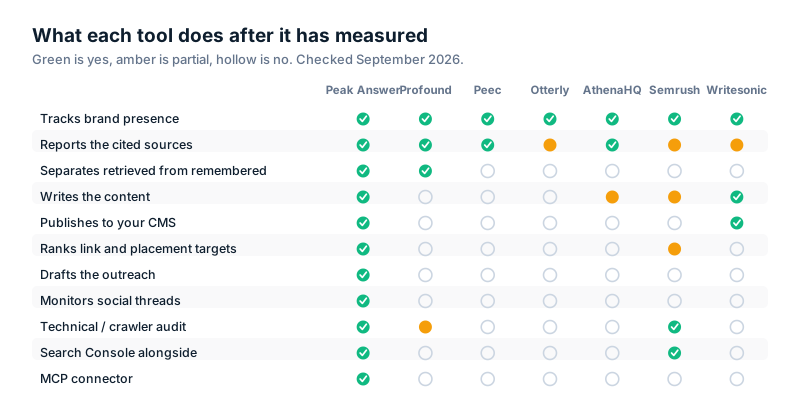
The rows that separate these products are the bottom seven, not the top two. Everything here tracks brand presence. The question is what happens next, and whether anybody at your end is going to do it if the product does not.
What the measurement actually says
Most writing in this category is advice. This section is the measurement behind it, and it is ours: fourteen markets measured end to end, and 505 tracking runs on our own category.
How winnable a market is varies more than anyone admits
We measured fourteen markets with the same engine the product runs for customers, scoring every domain the engines cited. The entry bar - how small a cited site can be and still get quoted - ranged from 12 to 66 out of 100.
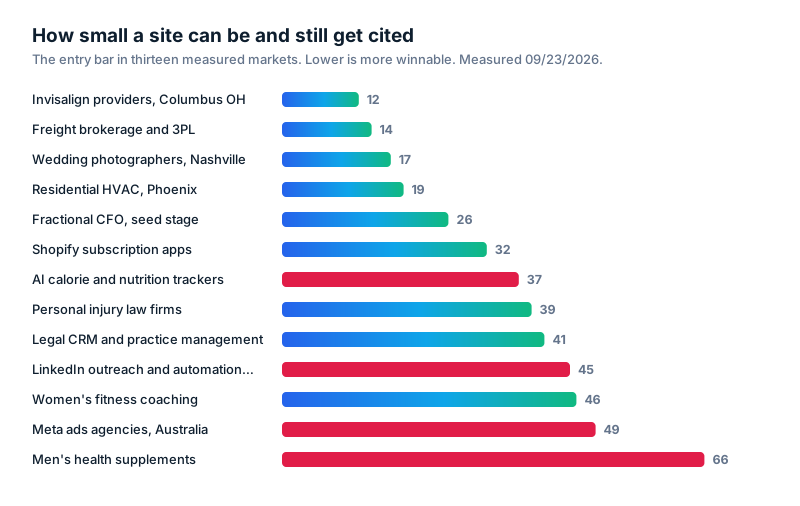
That is the difference between a quarter of work and a year of it, in the same discipline, decided entirely by which market you are in. Any vendor quoting one timeline has measured one market at most.
In Invisalign providers in a single city the bar was 12 and the typical cited site scored 25: a handful of well-made procedure and cost pages clears it. In men's health supplements the bar was 66 and GNC, a national retail chain, scored 62 and cleared it on one question in three, because the engines answer health questions out of medical sources and will not name a shop.
In most markets, your own site is not what gets cited
Content share is the proportion of cited sources that are somebody else's article rather than any vendor's own page. In nine of fourteen markets it was 100%.
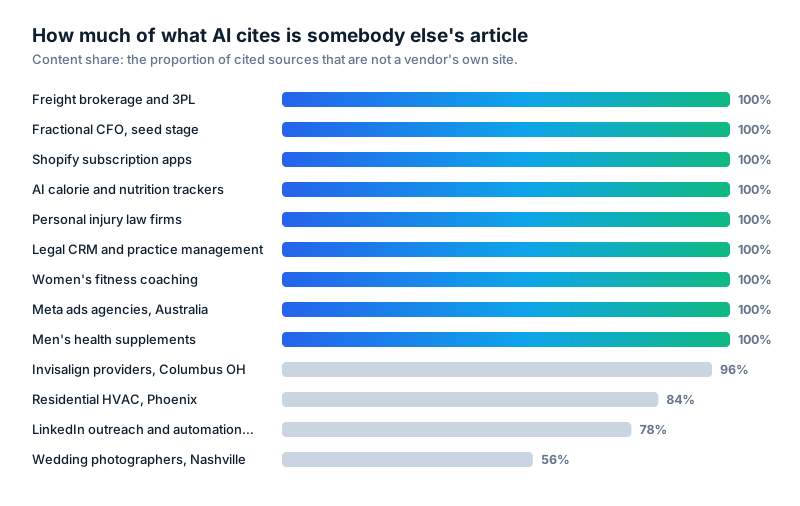
In those nine, publishing more of your own content cannot put you in the answer, because no vendor's own content is being cited at all. The mechanism is editorial: being named inside the pages that do get cited. The one outlier was wedding photography at 56%, where the answer to the question is a list of photographers and the engines cite their portfolios directly.
This is the single most useful thing to know before choosing a tool, and almost none of them will tell you, because almost none of them report at the source level.
The gap between the floor and the middle is where newcomers get in
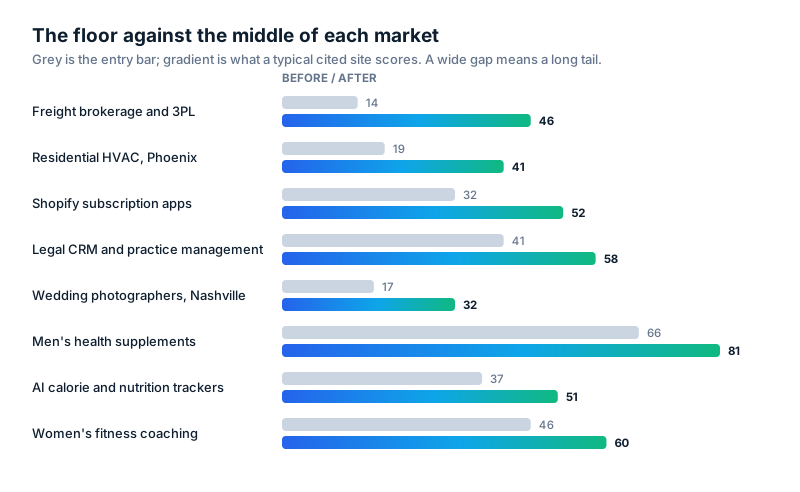
A wide gap means the engines are citing a few large publications and, underneath them, a scattering of much smaller sites. That tail is the opening. Freight brokerage had a bar of 14 against a median of 46, the widest spread we measured, and almost any serious page clears 14.
A narrow gap means the opposite. LinkedIn outreach tools had a bar of 45 against a median of 49 - four points - which means every cited site is roughly the same size and nothing small is getting in underneath.
We ran the same study on this category
505 tracking runs, 22 buying questions, every citation recorded and attributed to the question that produced it.
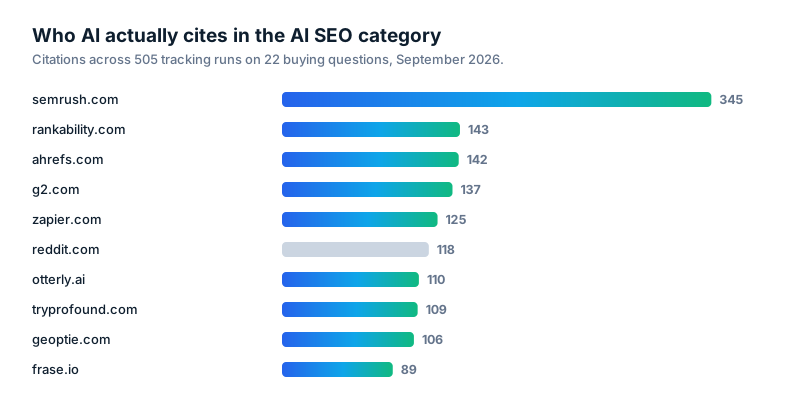
Two things fell out of it. Semrush at 345 citations is nearly two and a half times the next domain, and it is cited on use case, pricing and category questions rather than comparison ones: the engines reach for established publishers when the question is general. And Reddit at 118 citations is a top-ten source, which is the most actionable line on this page for a small company. You cannot become Semrush. You can answer a question in a thread.
The question type that quietly wastes a measurement budget
Six of our 22 questions were "alternatives to [competitor]". Those six produced most of the competitor citations in the whole study.
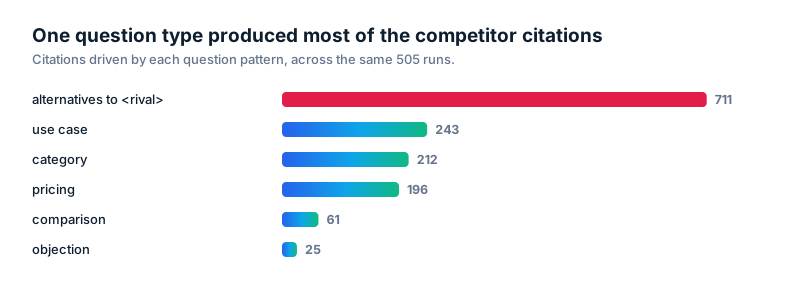
Obvious on reflection and we had not reflected on it: asking an engine to enumerate a competitor's alternatives returns competitors, cited from competitor comparison pages, none of which is a site you can get a link from. We cut that question type from six to two. The signal was worth having once; it was not worth a quarter of the budget every week.
If you are evaluating tools, this is worth checking in whatever you buy. Look at what your prompt set is made of, and look at what the citations come back as. A set made entirely of vendor-selection questions can only ever produce a citation list of vendors.
The one distinction that decides which work pays
Everything else on this page is detail. This is the thing to get right.
An AI engine answers in one of two ways, and they need opposite fixes.
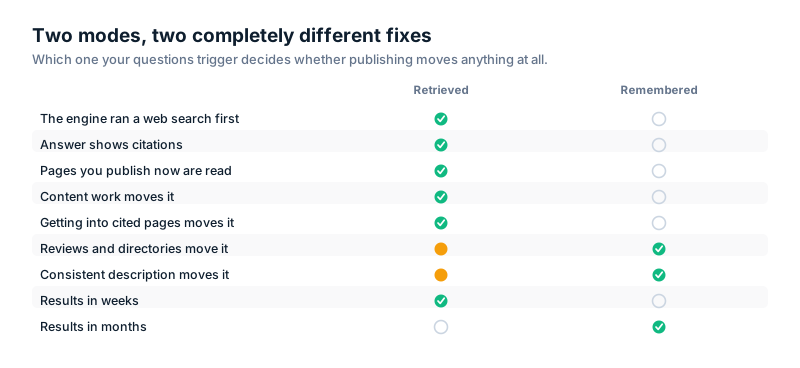
Retrieved. The engine ran a web search, read a handful of pages, and summarised them. Those pages decide the answer. Content and placement work, and they work in weeks, and a small company can win because the engine is summarising documents rather than ranking brands.
Remembered. The engine answered from training data that closed months ago. Nothing you publish this quarter will be read, because nothing is being read. Only breadth of presence moves it: reviews, directories, consistent description, over months.
Work on the wrong one and you get no result and no explanation, which is how a year disappears. So the question to ask any vendor is not how many engines they track. It is whether they will tell you, per question, which of these two you are facing.
Most of this category cannot. It is the row in the feature table worth more than the other fourteen put together.
Writesonic vs Peak Answer
Choose Writesonic when
Content production volume and quality is what you are buying, and measurement is a bonus.
Choose Peak Answer when
You want the measurement to decide what gets written. Same $49/mo entry price, six engines, source-level reporting, the retrieval-versus-memory split, drafts to your CMS, plus placements, outreach, social and technical work.
How to choose, whatever you pick
Convert every plan into responses per month. Questions × engines × frequency. Pricing in this category is quoted in prompts, credits and tracked keywords, and those are not the same unit. The cheapest headline price is frequently the most expensive per response.
Decide who acts. Most of these products report and stop. That is correct design if you have a content function. If you do not, a reporting subscription produces homework rather than results.
Check the two engines you care about, not the total count. Six is not better than five if your buyers use the five.
Ask to see raw captured answers, not a summary. An index you cannot audit is a number taken on faith, in a category too young to extend that.
Run two in parallel for a month. They will disagree on absolute numbers, which is expected. They should agree on direction and on which questions you lose, and that agreement is what you act on.
Frequently asked questions
Is Writesonic's AI visibility tracking accurate?
For what it measures, broadly yes. The limitation is depth rather than correctness: fewer engines, less source detail, and no retrieval-mode signal.
Can I use Writesonic for content and something else for tracking?
Yes, and it is a sensible pairing. Otterly at $29/mo or Peak Answer at $49/mo both cover the measurement side more thoroughly.
Does Writesonic publish to a CMS?
Yes, which is one of its genuine strengths.
Is it better than BabyLoveGrowth or Outrank?
It is the broadest of the three in format coverage. All three share the same structural issue: content aimed by keyword research rather than by measured answer gaps.